How to Document Hidden Damage in a Florida Insurance Claim
A ceiling stain tells you where damage became visible. It does not necessarily tell you where the water entered, how far it traveled, or which materials were affected along the way.
If the first estimate covers only the visible stain, it may leave out work needed behind the finished surface. When additional damage turns up behind drywall, under flooring, or during roof removal, document the discovery and explain how it changes the repair scope. Whether that work is covered depends on the cause of damage and the policy.
Record what changed before the evidence disappears
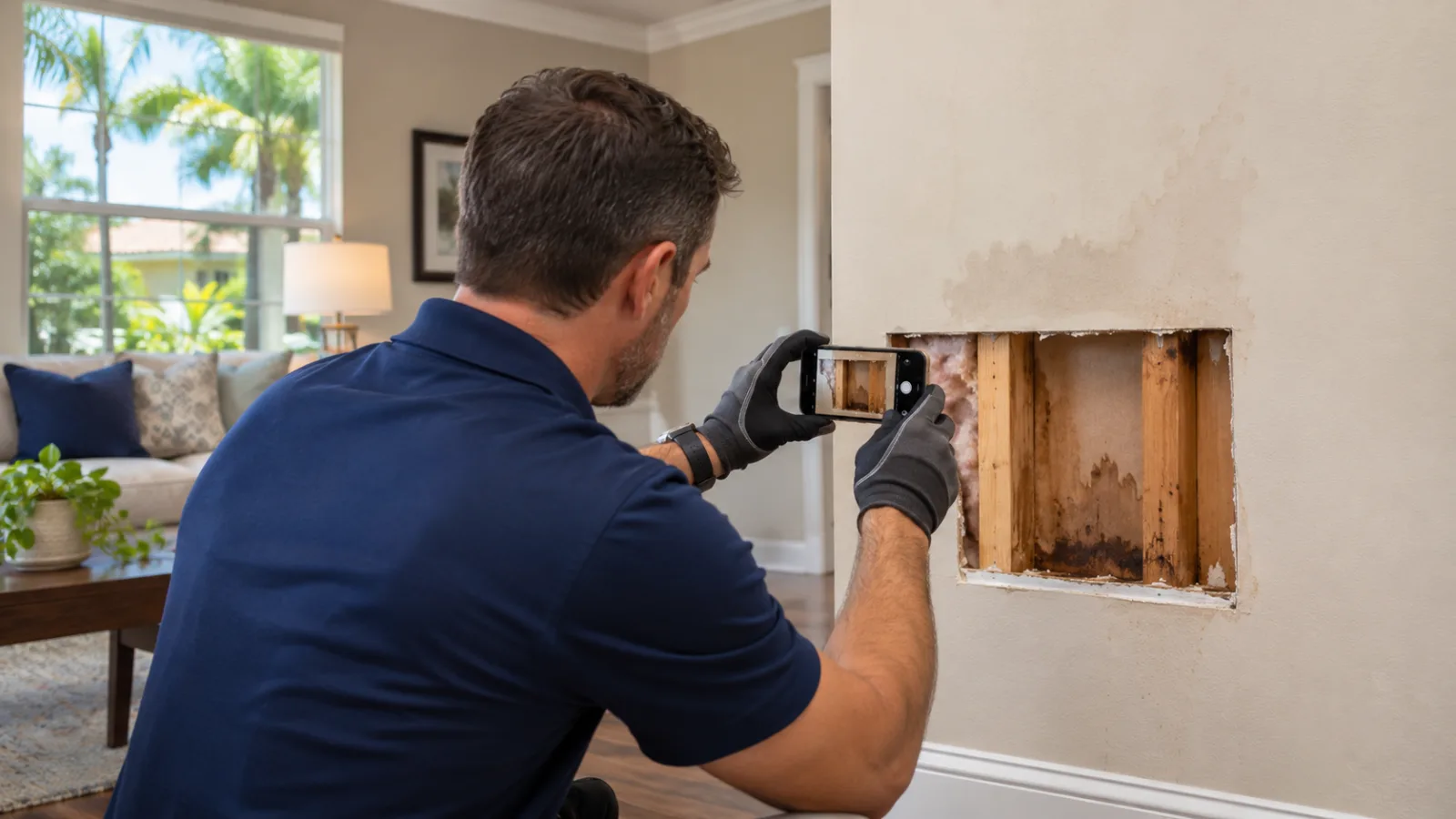
For example, suppose a contractor removes damaged baseboard and finds wet drywall extending into an adjacent room. A close-up shows the condition, but the insurer also needs to see which wall it is, how it connects to the reported damage, and what was removed before the photograph was taken.
Build a record that answers those questions. Take an overall room photo, a closer view showing the affected wall, and detail photos of the exposed condition. Record the date, room, and location. Ask the contractor to photograph the work as materials are removed, rather than waiting until everything is in a debris pile.
Save the original files. If you add arrows or labels for an explanation, keep those marked copies separate.
Keep the photos, contractor reports, estimates, and insurer correspondence together. Pocket Adjuster, our affiliated homeowner app, lets homeowners organize claim photos and documents and ask educational questions about the process. Confirm any AI-generated explanation against your policy and the underlying records.
The Florida Department of Financial Services recommends photographing damage before temporary repairs when possible, keeping repair receipts, and reviewing your policy’s duties after a loss. Document the conditions as you protect the property from further damage.
Separate the condition from the explanation
A photograph can show staining, deterioration, or visible growth. It may not establish when the condition developed or what caused it.
“We found this when we opened the wall” describes the discovery. Connecting that condition to the reported storm requires evidence of the cause and timing.
Ask the person evaluating the damage to explain the basis for their opinion. Where did the water appear to enter? What observations connect the concealed condition to the reported event? Are there prior repairs, maintenance issues, or other possible sources that need to be considered?
Moisture readings can help document conditions at the time of testing, but a reading alone does not establish the date or cause of damage. Keep the readings with their locations, dates, and the professional’s explanation. Our water damage documentation checklist identifies other records that can help explain the affected areas and repair scope.
If the cause remains uncertain, identify what needs further investigation. For a possible roof leak, a roof inspection by Orange Contracting & Roofing, our affiliated contracting company, can help document accessible roof conditions. A contractor’s findings still need to be evaluated against the policy and other claim evidence.
Give the insurer a specific issue to evaluate
When additional damage is discovered, notify the insurer promptly in writing. Refer to the existing claim number and describe the new finding, where it was found, and how it affects the proposed work.
A useful submission connects three things:
-
The condition: photographs, measurements, inspection notes, or testing.
-
The proposed repair: what needs to be removed, repaired, or replaced, and why.
-
The cost: an estimate identifying the additional quantities and work.
If the earlier estimate included ceiling drywall but the exposed insulation is also affected, identify that difference directly. Sending a higher total without explaining the added scope makes the disagreement harder to evaluate.
Ask whether the insurer wants to reinspect before the concealed area is closed. Keep a record of the request and response, and coordinate access with the work needed to protect the property. Our article on incomplete insurance inspections explains how to identify areas that need another look.
Preserve evidence without creating another problem
Keep removed materials when it is safe and practical, and ask about inspection or preservation needs before disposal. The Florida Insurance Consumer Advocate advises retaining damaged items when safe or photographing items that cannot safely be kept.
Do not keep hazardous material in an occupied room to preserve evidence. Have the appropriate professional address unsafe conditions and document what was removed, why it could not remain, and where it was located.
Discovery of hidden damage also does not automatically restart a claim deadline. Reporting requirements and other deadlines need to be checked against the policy, applicable law, and the history of the claim.
If the insurer disputes the additional work, ask for a written explanation identifying whether the disagreement concerns the cause, coverage, repair method, quantity, or price. Each calls for a different response.
NeJame Claims Adjusting can review the policy, claim documents, and damage record to help identify what remains unresolved. Call 407-637-1000 to discuss your claim.