Hurricane Isaias Claim Deadlines: What Florida Homeowners Must Know
If Hurricane Isaias damaged your home, report the damage promptly and keep a written record of your claim. Florida law sets deadlines for reporting a loss, asking for additional payment, and getting a response from your insurer. Those deadlines run from different dates.
Before I started representing policyholders, I worked as a staff adjuster on the carrier side. I know how a claim file gets built from the inside. Photos, estimates, and a clear record of what was sent and when give you something concrete to work with when the insurance company's answer does not match the damage.
Here are the deadlines to track and the records to keep for your Florida hurricane insurance claim.
The deadlines your insurer has to meet
Florida Statute §627.70131 generally requires these timeframes for residential property claims, subject to statutory exceptions:
| Insurer action | General deadline | | --- | --- | | Acknowledge claim communications | 7 calendar days after receipt | | Conduct a physical inspection, if used | 30 days after receipt of proof-of-loss statements | | Pay or deny an initial, reopened, or supplemental claim, or a portion | 60 days after receipt of notice |
An October 10 claim notice puts the unadjusted 60-day date at December 9. Qualifying late payments bear interest. OIR may authorize an extension of up to 30 days for specified circumstances beyond insurers' control.
A document request does not automatically pause the clock. Information-request tolling applies when material information remains unprovided 10 days after receipt of the request; the request must have been sent at least 15 days before the payment-or-denial deadline. Tolling ends when the insurer receives the information. Mediation or contractual dispute resolution can also pause these requirements.
Keep requests and responses together. If the insurer claims more time, ask it to identify the reason and dates in writing.
Your deadlines for reporting and supplementing a claim
Under Florida Statute §627.70132, the general notice limits are:
- Initial claim: One year after the date of loss.
- Reopened claim: One year after the date of loss. This concerns additional costs for damage already disclosed on a claim the insurer closed.
- Supplemental claim: Eighteen months after the date of loss. This concerns additional loss or damage from the same peril previously adjusted, or costs incurred during repairs under a timely reported open claim.
For a loss dated October 9, 2026, those general limits would be October 9, 2027, and April 9, 2028, respectively. Confirm the applicable loss date and claim category before relying on a calendar reminder. The statute specifies how weather-related loss dates are determined and includes limited exceptions.
Finding more damage later does not restart the reporting period. Your policy may also require prompt notice, so report known damage now. These notice limits are separate from deadlines for filing a lawsuit.
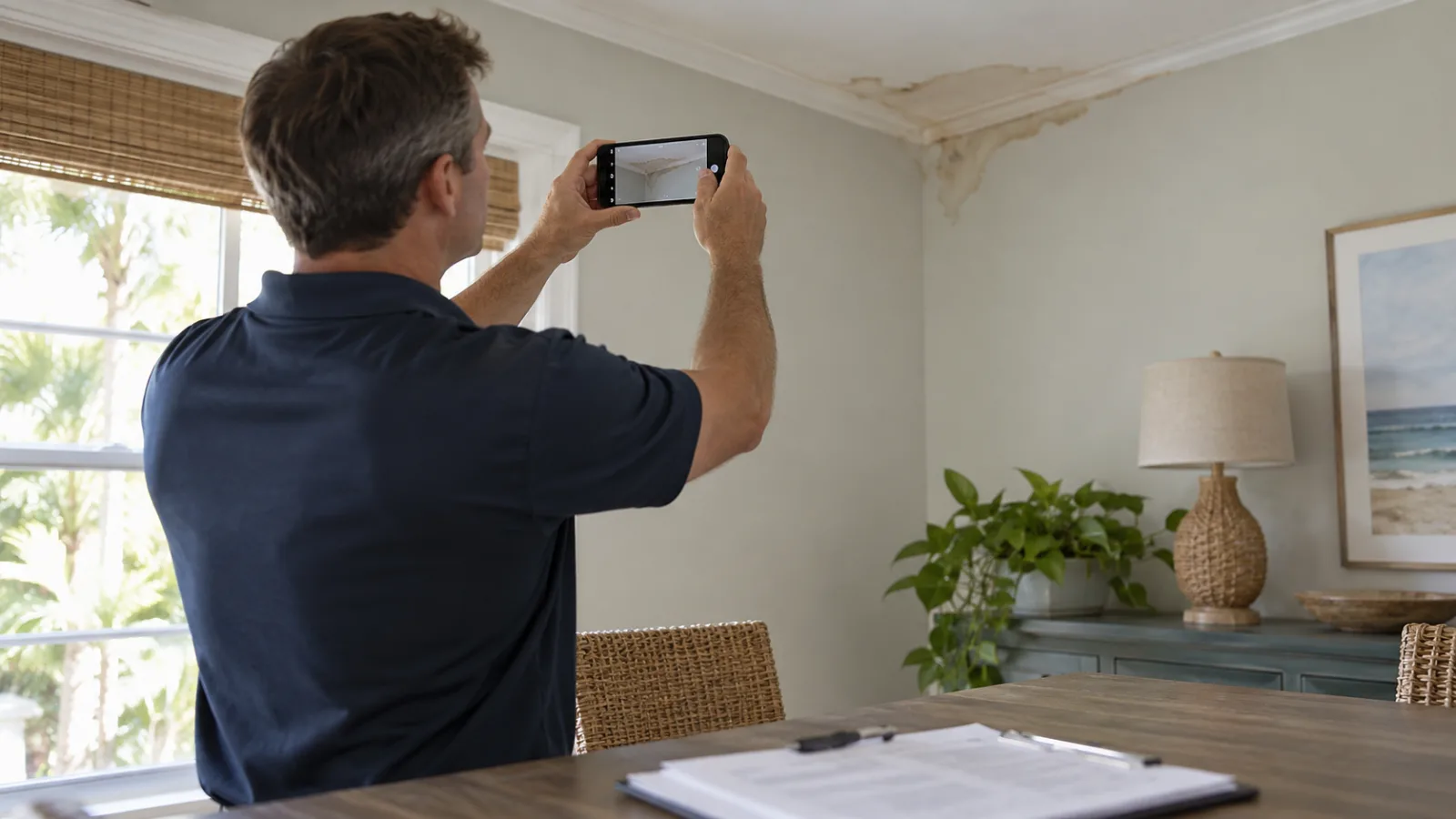
A tree strike, for example, may leave damage beyond the visible hole in a roof. Cracked framing, damaged decking, or water intrusion may require further inspection. Photograph what you can safely see and arrange a professional inspection of areas you cannot safely access.
Keep an administrative closure from becoming another problem
A claim marked closed may still leave damage or payment issues unresolved. Ask why it was closed and what the insurer needs to review the outstanding items. Do not assume that reopening a file gives you a new reporting deadline.
Check voicemail and spam folders, save the adjuster's contact information, and respond to requests in writing. If you cannot provide something yet, explain why and ask what alternative documentation the insurer will accept. Keep the original request and your response.
When a file stops moving, send a short status request with your claim number, the documents already submitted, and the items still awaiting a decision. Our page on delayed insurance claims explains how we help organize that review.
Your roof's age and permit history matter
Many homeowners still believe that damage to 25% of a roof automatically requires the insurance company to replace the whole thing. That conclusion takes more than a percentage.
Florida Statute §553.844(5) creates an exception for a roofing system or section built, repaired, or replaced in compliance with the 2007 Florida Building Code or a later edition. When at least 25% is repaired, replaced, or recovered, only the affected portion must meet the applicable current code under that exception.
That provision does not decide whether a proposed repair is practical or whether the policy covers a broader replacement. Gather the roof permit, prior invoices, photographs, and the insurer's estimate. A roof damage claim review should consider the documented damage, policy, repair scope, and applicable code together.
Check the deductible shown in your policy, too. Use the actual policy amount when comparing an estimate with a payment.
If you are considering a public adjuster
You do not need a public adjuster for every claim. If your insurer pays fairly and the repair scope is complete, that is a good outcome. If the claim is stalled, underpaid, or denied, ask what a public adjuster would review and how the fee would apply before signing.
Florida Statute §626.854 generally caps public-adjuster fees at 10% for claims based on a governor-declared emergency and made during the year after the declaration. The general non-emergency cap is 20%; additional restrictions can reduce the allowable fee for particular payments.
For emergency-related contracts, the cancellation period extends to 30 days after the loss or 10 days after signing, whichever is longer. Review the contract's cancellation instructions.
Ask for the adjuster's license number and verify it through the Florida Department of Financial Services licensee search. Take time to read the agreement and ask questions about any provision you do not understand.
What to do this week
- Write down the date of loss, claim number, and date you reported the damage. Save proof of submission.
- Calendar the reporting limits and the insurer's initial 60-day response date. Track any claimed extensions or tolling separately.
- Photograph damaged areas and belongings before cleanup or repairs when safe. Do not enter an unsafe attic or climb a damaged roof.
- Keep receipts for tarps, tree removal, temporary housing, and emergency repairs, along with descriptions of the work.
- Request the complete policy and compare the insurer's estimate with the damage and proposed repairs.
- Answer document requests promptly and keep a list of unresolved items.
If your Hurricane Isaias claim is stuck, underpaid, or denied, request a free claim review from NeJame Claims Adjusting or call (407) 637-1000. We can review what the insurer has addressed and what still needs documentation.
NeJame Claims Adjusting, Inc. · Maitland, Florida · Firm license W805417 · Designated adjuster license P124170. This article provides general information, not legal advice. Policy terms, applicable law, and claim circumstances affect the available options.