Your Insurance Company Knows Your Claims History — Do You?
How to Pull Your Free LexisNexis C.L.U.E. Report Before You File or Shop for a Policy
There's a file on you and your house that you've probably never seen, and your insurance carrier reads it before they quote a premium, write a policy, or decide whether to renew you.
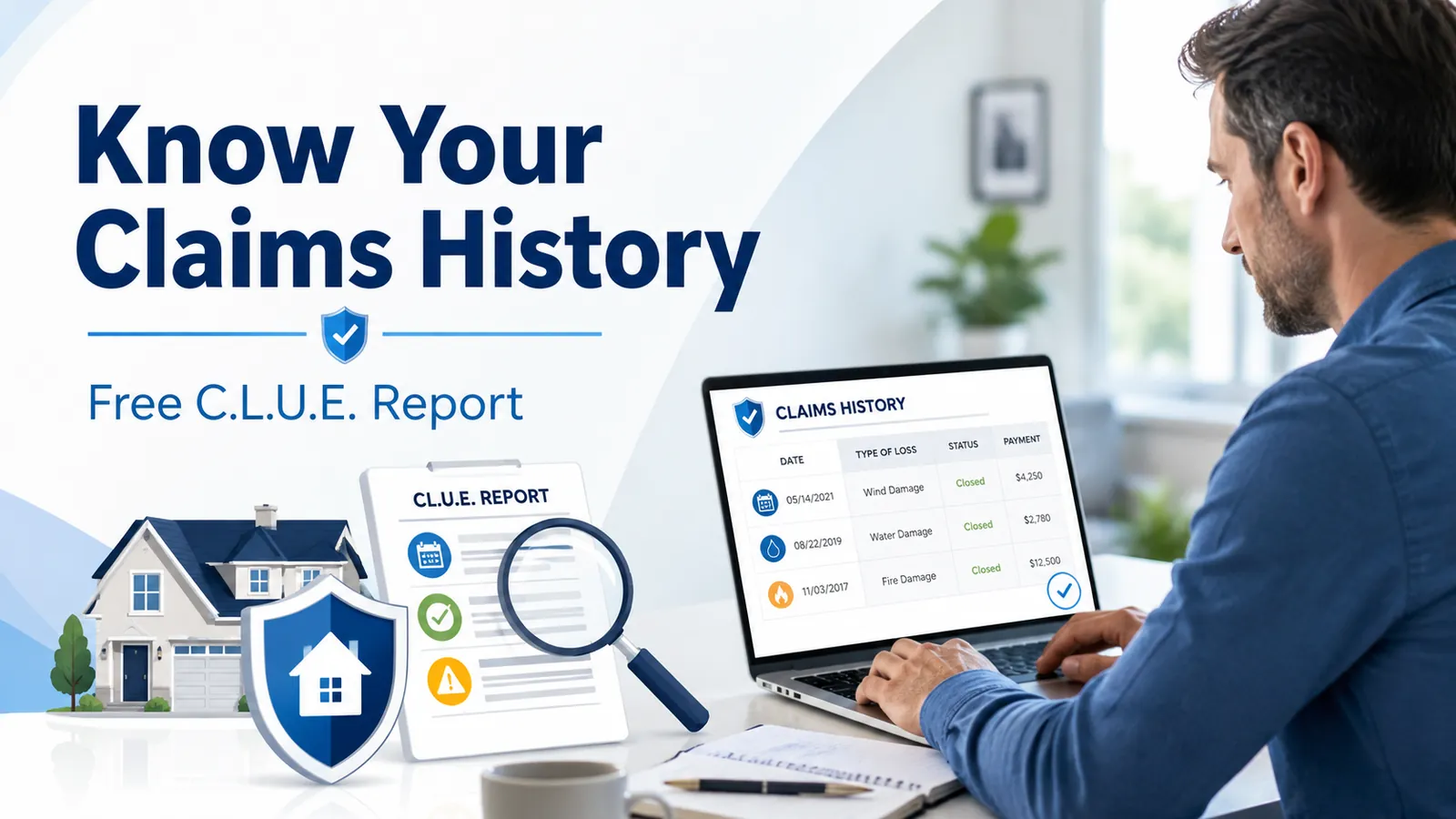
It's called your C.L.U.E. report — short for Comprehensive Loss Underwriting Exchange — and it's maintained by LexisNexis Risk Solutions, a federally regulated consumer reporting agency. It contains up to seven years of insurance claims tied to you and to every property you've lived in. More than 90% of home insurance carriers and more than 99% of auto carriers feed data into it and pull from it.
Under federal law, you can request a free copy once every 12 months. Most homeowners never do. That's a mistake — and at NeJame Claims Adjusting, we see the consequences of it every week.
This guide walks you through exactly how to pull yours, what's in it, what to look for, and what to do if something is wrong.
What Is a C.L.U.E. Report, Exactly?
C.L.U.E. is a claims information exchange. When you (or a previous owner of your home) file an insurance claim, the carrier reports it to the C.L.U.E. database. So does every other carrier in the exchange. That data is then made available — for a fee — to any other insurer who wants to underwrite a new policy on you or on the property.
A typical C.L.U.E. report entry for a homeowners claim includes:
- Your name and date of birth
- The policy number tied to the claim
- The date of loss
- The type of loss (wind, water, fire, theft, liability, etc.)
- The dollar amount the carrier paid out
- A description of the covered property and the property address
The file does not include your credit report, criminal records, lawsuits, or judgments. It's loss history only.
Here's the critical piece most homeowners don't realize: a C.L.U.E. entry is created whenever a carrier opens a claim file — even if the carrier ultimately paid nothing, even if you withdrew the claim, and even if the carrier formally denied it. A phone call to your agent asking "would this be covered?" can, depending on how the agent logs it, generate a claim file. That file then follows you for seven years.
Why You Should Pull Your Report Before You Do Almost Anything
There are four moments in a homeowner's life when your C.L.U.E. report is doing work in the background — usually against you, if it has errors.
1. Before you shop for a new policy. Carriers use your C.L.U.E. report to set your premium and to decide whether to write you at all. In Florida's tight homeowners market, a couple of claims in the last seven years can move you from a standard carrier to a surplus lines carrier and double your premium. If your report shows a claim that wasn't really a claim, you're paying for it.
2. Before you file a new claim. This is the conversation we have with prospective clients most often. A homeowner has water damage or wind damage and wants to know whether to file. The honest answer depends partly on what's already on your C.L.U.E. report. If you've had two prior claims in the last three years, a third — even a small one — can trigger non-renewal in Florida's current market. We can't advise you intelligently without knowing what the carrier is going to see.
3. Before you buy a house. The previous owner's claims show up on the property's C.L.U.E. record. If the home you're under contract on had a $40,000 water loss two years ago, that affects what you'll pay for insurance and may affect whether you can get coverage at all. In Florida, where insurance availability can make or break a closing, this matters. As a buyer, you can ask the seller to pull the C.L.U.E. report on the property and share it with you before you waive your inspection period.
4. Before you sell a house. The same logic in reverse. If you know what's on the property's report, you can speak to it honestly with buyers — or get errors corrected before they kill a deal.
How to Pull Your Free C.L.U.E. Report — Step by Step
LexisNexis is required by the Fair Credit Reporting Act to give you one free copy of your file every 12 months and to deliver it within 15 days of receiving your verified request.
The fastest method is the online portal at consumer.risk.lexisnexis.com/request.
Here's what to expect:
Step 1 — Identity information. You'll be asked for your first name, last name, street address, city, state, ZIP, and date of birth. These are required. For the actual disclosure report (as opposed to a simple opt-out), you'll also need to provide either your Social Security Number or your driver's license number and state. LexisNexis uses this only to confirm it's really you; they aren't allowed to sell it or use it for other purposes.
Step 2 — Check "Request Your Consumer Disclosure Report." This is the box that triggers the actual C.L.U.E. report request. Don't confuse it with the opt-out or "Description of Procedure Letter" options — those are different requests for different purposes.
Step 3 — Optional fields. You'll see fields for email and phone. Email is optional, but if you want any email-linked data included in your report, you'll need to provide and verify it.
Step 4 — Submit. You'll get an on-screen acknowledgment. Within roughly 10 days, you should receive a letter from LexisNexis at the mailing address you provided, telling you how to access your report online. If you don't receive the letter within 10 days, call the LexisNexis Consumer Center at 1-888-497-0011. They operate Monday through Friday, 8 AM to 7 PM Eastern.
If you'd rather not use the online portal, you can request your report by phone at 1-888-497-0011 or by mail. The online method is faster.
A few practical tips from us:
- Use your current legal mailing address. LexisNexis delivers your access letter by U.S. Mail, not email.
- If you've moved in the last seven years, that's fine — the report follows the person, not the address (though the property addresses where claims occurred are listed inside it).
- If you're trying to pull a report on a property you're buying, the simplest path is to ask the current owner to pull their own report and share it. Only the consumer named on the file can request it directly.
What to Look for Once You Have the Report
When the report arrives, read it line by line. The most common problems we see in Florida files:
Claims listed that you never filed. Sometimes a call to an agent gets logged as a claim even though no claim was actually opened. Sometimes a claim from a prior occupant of your address attaches to your file by error.
"Paid" claims that were actually denied or withdrawn. The amount paid should match what your carrier actually paid you. If it shows a payout when you got nothing, that's a dispute.
Wrong loss type. A wind-driven rain claim coded as a flood claim, for example, can affect future underwriting in ways a wind claim wouldn't.
Claims older than seven years. They shouldn't be there. The file is supposed to roll off at the seven-year mark.
Duplicate entries. One loss event reported as two separate claims.
What to Do If You Find an Error
You have the right under the Fair Credit Reporting Act to dispute anything on the report that's inaccurate or incomplete. LexisNexis is required to investigate, and the carrier that originally reported the data has to verify it or correct it.
To start a correction, contact LexisNexis through their Help page at consumer.risk.lexisnexis.com/help, by mail, or by phone at 1-888-217-1591. Be prepared to explain specifically what's wrong and to provide any supporting documents you have — denial letters, settlement statements, agent emails, anything that contradicts what's on the report.
If you find something that materially affects your insurability and you don't know how to dispute it effectively, this is a conversation worth having with a public adjuster. We see these files constantly, we know what carriers are looking at when they price you, and we know which carriers are reasonable about correcting errors and which ones aren't.
A Word on the Other Database You've Probably Never Heard Of
C.L.U.E. is the dominant claims exchange, but it isn't the only one. Verisk operates a parallel database called A-PLUS (Automated Property Loss Underwriting System) that some carriers also use. If you're being quoted unusually high premiums and your C.L.U.E. report looks clean, A-PLUS is worth checking too. Verisk has its own consumer disclosure process.
The Bigger Point
Insurance is an asymmetric information game. Your carrier knows things about your claims history that you don't, and they price you based on that information whether or not it's accurate. The C.L.U.E. report is the one tool that lets you see the same picture they're seeing.
Pull it once a year. Pull it before you shop. Pull it before you file. Pull it before you buy a house. It's free, it takes ten minutes, and it's one of the few places where the law actually puts the homeowner on equal footing with the carrier.
About NeJame Claims Adjusting
NeJame Claims Adjusting is a licensed Florida public adjusting firm representing policyholders — not insurance carriers — in property insurance claims. Our principal, Larry NeJame, holds public adjuster licenses P124170 and W805417 and brings a rare combination of perspectives to every claim: former carrier-side staff adjuster, licensed Florida residential contractor (CRC1336049), and licensed roofing contractor (CCC1337502). We represent homeowners across Florida who want their claim evaluated, supplemented, or disputed by someone who knows what the other side is looking at.
If you've pulled your C.L.U.E. report and want a professional to help you make sense of what's on it — or if you're weighing whether to file a new claim and want to think it through with someone on your side first — request a free claim review.
This article is general information for Florida policyholders and is not legal advice. Specific claim situations should be evaluated on their facts.