How Public Adjusters Use Roof Age and Lifespan Data to Fight Low Settlement Offers
When a Florida homeowner files a roof damage claim, the conversation almost always comes back to one thing: how old is the roof? Insurance companies know this number matters — and they use it aggressively to reduce what they pay. As public adjusters, we know how to use it right back.
One of the first tools we reach for when evaluating a new claim is an accurate roof lifespan baseline. Our colleagues at Orange Contracting & Roofing recently published a Florida Roof Lifespan Calculator that's become a practical reference in our pre-inspection workflow. It accounts for Florida-specific variables — UV exposure, humidity cycles, hurricane wind ratings, and material type — to produce a realistic expected lifespan range rather than a generic national average. If you haven't used it yet, bookmark it. We'll explain exactly why below.
Why Roof Age Is the Battleground in Most Florida Claims
Florida's insurance market operates under rules that make roof age one of the most consequential numbers in a property claim. Since the legislative changes that took effect in 2023, insurers are now permitted to limit roof coverage based on the age and condition of the roof at the time of loss. In plain terms:
- Roofs under a certain age may qualify for Replacement Cost Value (RCV) coverage.
- Older roofs are often pushed into Actual Cash Value (ACV) settlements, where depreciation is deducted before any payment is made.
- Condition at the time of loss is increasingly being used to deny or reduce claims outright.
What many policyholders don't realize is that the insurer's depreciation schedule and their adjuster's age estimate are both negotiable — if you have the right documentation to challenge them.
That's where our job begins.
The Public Adjuster's Pre-Inspection Process: Establishing a Lifespan Baseline
Before we ever step foot on a roof, we establish what the expected remaining useful life should look like under Florida-specific conditions. National figures like "asphalt shingles last 20–25 years" don't hold up here. Florida's combination of intense UV radiation, high humidity, and frequent wind events accelerates material degradation in ways that generic tables fail to account for.
The Florida Roof Lifespan Calculator at Orange Contracting's site factors in:
- Roof material type (3-tab shingles, architectural shingles, tile, metal, modified bitumen, TPO, etc.)
- Florida climate zone and regional exposure
- Installation date and estimated remaining useful life
- Wind resistance ratings relative to Florida building code requirements
We use this kind of data to establish a documented, defensible baseline before we ever argue with a carrier's adjuster or umpire. When an insurer claims a 14-year-old architectural shingle roof had no useful life remaining and depreciate it down to nearly nothing, we need a counter-argument grounded in material science and local conditions — not a gut feeling.
How We Turn This Data Into Claim Leverage
Here's how roof lifespan data plays out in a real public adjusting workflow:
1. Challenging Excessive Depreciation
Depreciation calculations are supposed to reflect the actual reduction in value based on age, wear, and expected remaining life. When a carrier applies a flat 5% per year across the board regardless of material or maintenance history, that's a starting point for negotiation — not a final number. A well-maintained 12-year-old metal roof in Central Florida that was properly installed and has documented maintenance history should not be depreciated the same way as a neglected 3-tab shingle roof of the same age.
2. Supporting an ACV-to-RCV Upgrade Argument
Some policies include a provision allowing the policyholder to recover the depreciation holdback after repairs are completed. But before we can make that argument, we need to establish that the roof had remaining useful life at the time of loss. The lifespan calculator gives us a baseline figure to anchor that conversation.
3. Countering a Condition Denial
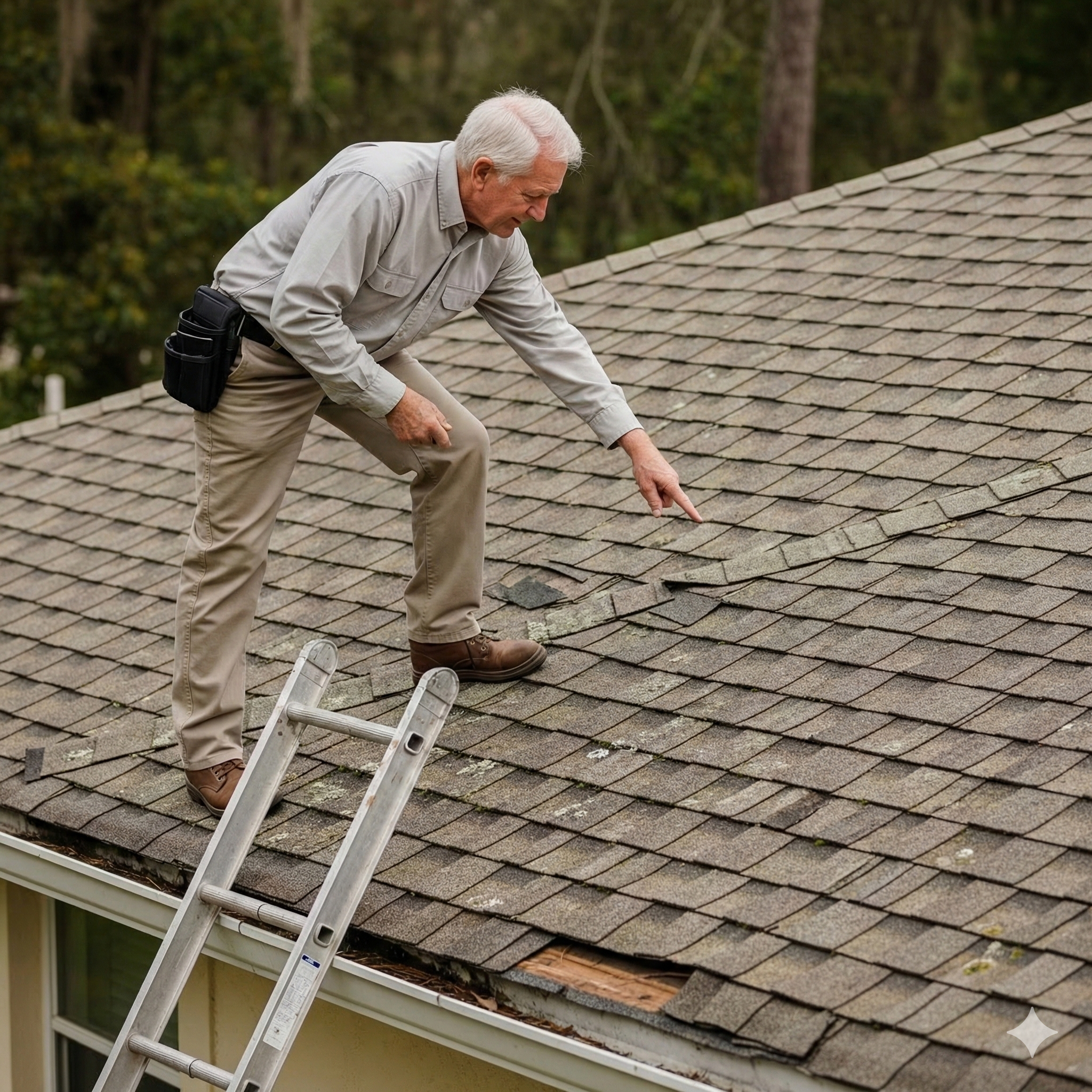
Insurers increasingly send inspectors to photograph pre-existing wear and use those photos to argue that the damage was not caused by the covered peril. If our lifespan analysis shows that the material was well within its expected service life at the time of the storm, it directly undermines a condition-based denial. A 10-year-old tile roof that should have 20–30 years of useful life remaining does not suddenly become a "maintenance issue" because an adjuster photographed some granule loss.
4. Building the Supplement File
On partial-loss claims, where the insurer wants to patch instead of replace, establishing remaining lifespan helps support a matching and uniformity argument. Florida law does not require a homeowner to accept a patchwork repair that doesn't match the existing roof system. Lifespan data reinforces why full replacement is the correct scope.
What This Looks Like on a Real File
Consider a common scenario we handle regularly: a Central Florida homeowner has a 2012 architectural shingle roof. A named storm passes through, and the carrier's initial estimate offers an ACV settlement that accounts for heavy depreciation, citing "age and wear." The payout barely covers half the replacement cost.
Our process:
-
Pull the lifespan data. Architectural shingles in Florida typically carry a 25–30 year manufacturer rating, with real-world performance often landing between 18–22 years depending on exposure and maintenance. A 2012 roof is roughly 12–13 years old — well within its expected serviceable life.
-
Document the pre-storm condition. We look for permit records, prior inspection reports, maintenance logs, and any available drone or satellite imagery showing the roof's condition prior to the storm.
-
Use the calculator as a supporting reference. The Orange Contracting Florida Roof Lifespan Calculator provides a clear, publicly accessible reference point that isn't just our opinion — it's a contractor-informed tool calibrated to Florida conditions.
-
Draft the supplement. With the lifespan baseline established, we can challenge the depreciation line-item by line-item and make the case for either a reduced depreciation percentage or a full RCV settlement.
The result is typically a significantly improved settlement — often tens of thousands of dollars more than the initial offer.
A Note on Florida's Evolving Roof Coverage Rules
Florida's insurance reform legislation from 2022 and 2023 changed the landscape in ways that favor insurers, but they don't close the door on a strong supplemental claim. The key is documentation and preparation. Carriers are counting on policyholders — and sometimes their own contractors — to accept the first number without pushback.
That's not how we operate at NeJame Claims Adjusting.
We review every claim against the full scope of the policy, the applicable building codes, and the actual condition and expected lifespan of the roofing system. Roof age is a factor, but it's never the whole story.
Have a Roof Damage Claim That Doesn't Feel Right?
If you've received a settlement offer that seems low, or your carrier is telling you your roof is "too old" to be fully covered, we want to hear from you. Use the Florida Roof Lifespan Calculator as a first step to get a sense of where your roof should stand — then call us. We offer free claim reviews and work on a contingency basis, meaning we don't get paid unless you do.
NeJame Claims Adjusting
Florida Licensed Public Adjusters
Serving Central Florida and Statewide
📞 (407) 637-1000
🌐 nejameclaims.com
📍 105 Candace Dr, Suite 129, Maitland, FL 32751
Firm License # W805417
NeJame Claims Adjusting is a licensed public adjusting firm. This article is for informational purposes only and does not constitute legal or insurance advice. Policy terms and coverage vary. Consult your policy documents and a licensed professional for guidance specific to your claim.