Should I Hire a Public Adjuster or Handle My Insurance Claim Myself?
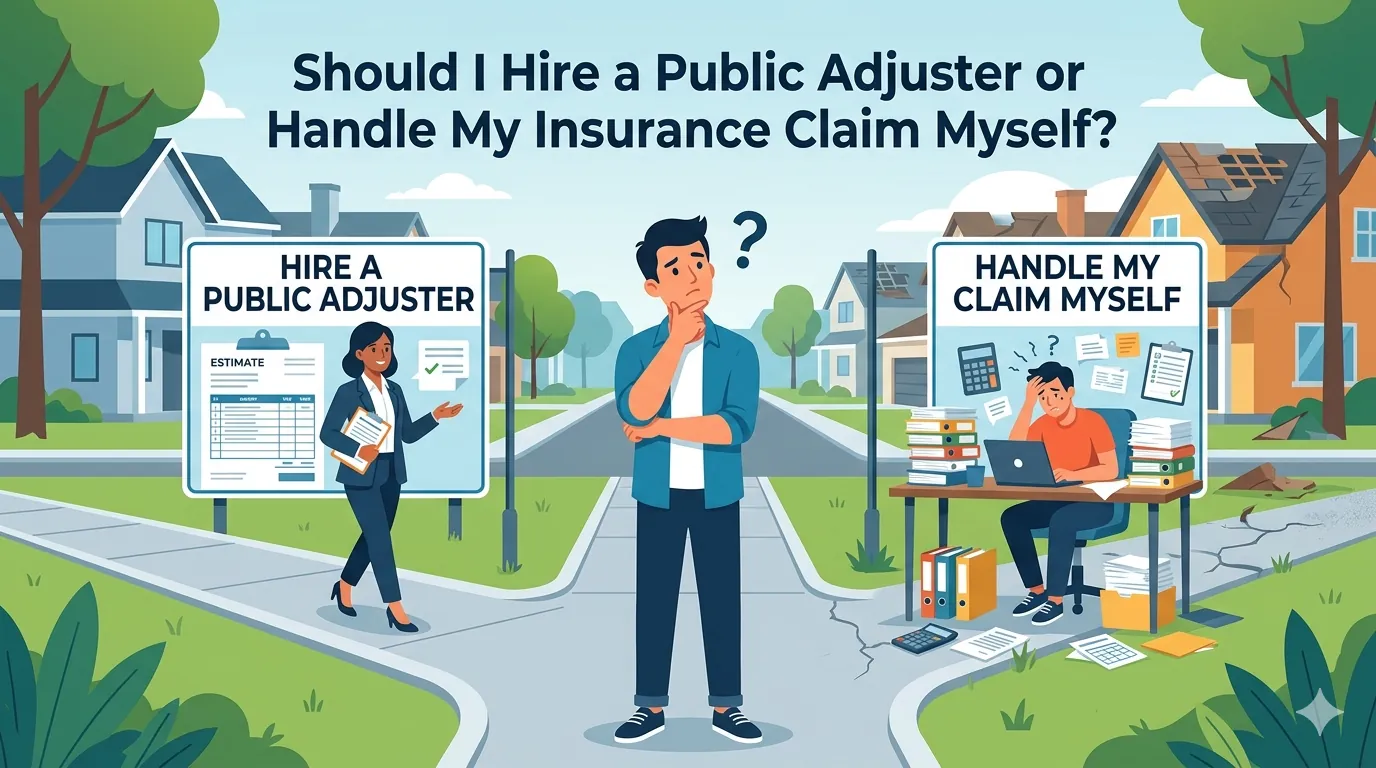
A public adjuster is worth hiring when your Florida property damage claim is complex, your settlement offer seems low, or you don't have the time and knowledge to negotiate with your insurance company effectively. For straightforward claims with minor damage that clearly falls within your coverage, handling it yourself can make sense. The decision comes down to the size and complexity of your loss, your comfort level with insurance policy language, and whether the potential increase in your settlement justifies the adjuster's fee.
That direct answer covers the basics, but the real question most Central Florida homeowners are asking is more nuanced: how do I know which category my claim falls into? This guide breaks down exactly how to evaluate your situation so you can make a confident, informed decision.
What a Public Adjuster Actually Does
Before you can decide whether to hire one, you need to understand what a public adjuster brings to the table — and how their role differs from the adjuster your insurance company sends to your home.
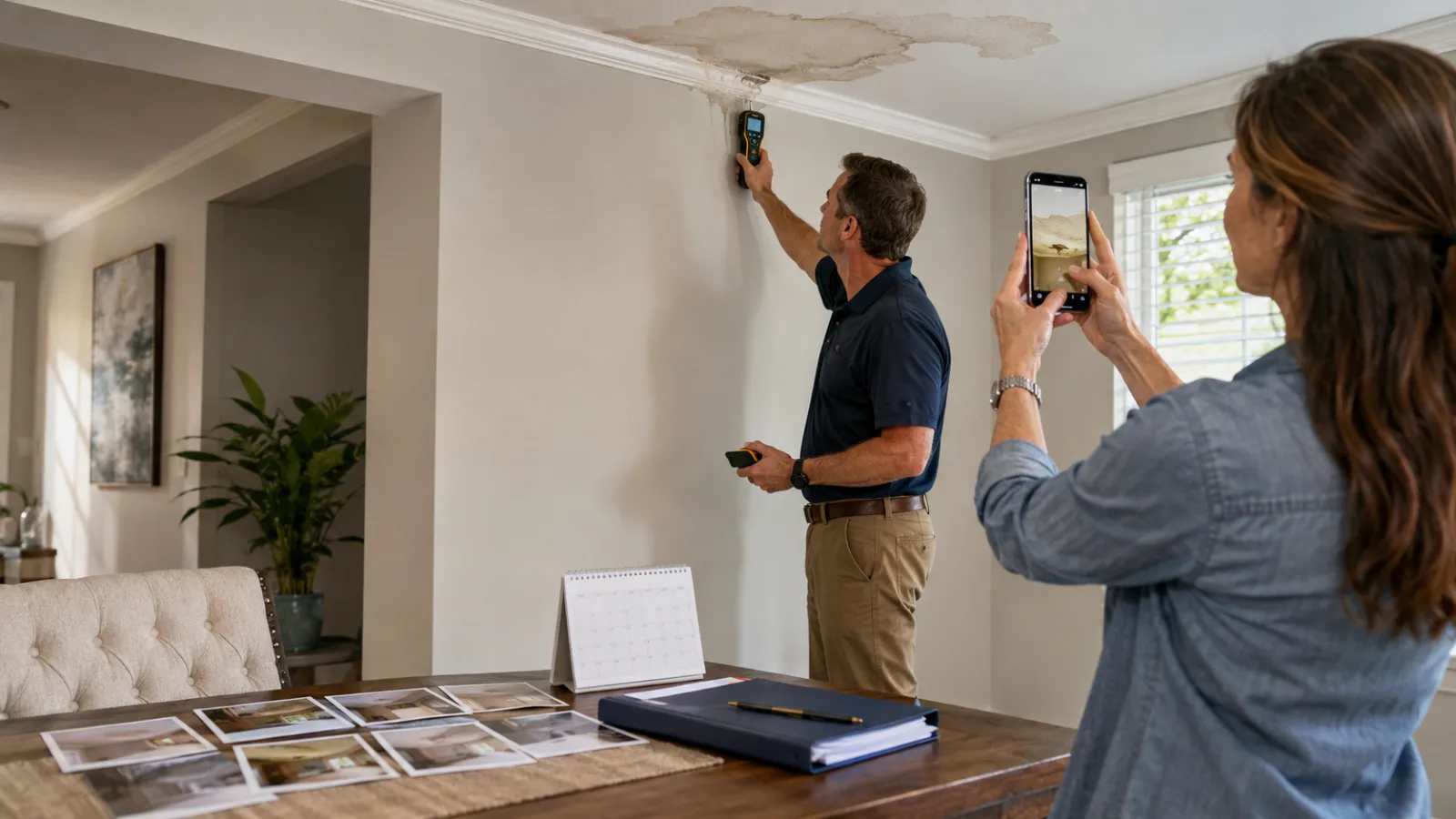
A public adjuster is a state-licensed insurance professional who works exclusively for you, the policyholder. They are licensed by the Florida Department of Financial Services and are legally required to act in your best interest. Their job is to review your insurance policy, inspect and document your property damage, prepare a detailed estimate of the loss, and negotiate with your insurance company to reach a fair settlement.
This is fundamentally different from the insurance company's adjuster. That person — whether a staff adjuster on the carrier's payroll or an independent adjuster contracted by the carrier — represents the insurance company's financial interests. They are professional and often fair, but their employer is the company writing the check, not you. If you want to understand these roles more deeply, our post on independent adjusters, staff adjusters, and public adjusters breaks down the differences in detail.
At NeJame Claims Adjusting, our founder spent years as a carrier-side staff adjuster before becoming a licensed public adjuster and a licensed general contractor. That dual perspective — understanding both how carriers evaluate claims internally and how repairs are actually scoped and priced in the field — is exactly the kind of expertise that makes the difference between an adequate settlement and a fair one.
When Handling Your Claim Yourself Makes Sense
Not every claim requires professional help. Here are situations where managing your own claim is reasonable:
The damage is minor and clearly covered. If a pipe burst in your kitchen, the damage is limited to one room, and your policy clearly covers sudden and accidental water discharge, you may be able to handle the claim yourself. The scope of work is straightforward, the coverage question is simple, and the dollar amount may not justify an adjuster's fee.
Your carrier has a strong track record of fair settlements. Some carriers consistently pay claims fairly and promptly. If you've had positive past experiences and the current claim is straightforward, the process may go smoothly without outside help.
The claim amount is small relative to your deductible. If the damage barely exceeds your deductible, the net settlement may not leave much room for an adjuster's contingency fee to make financial sense.
When Hiring a Public Adjuster Pays Off
There are specific situations where professional representation isn't just helpful — it's a financial decision that typically results in a significantly higher net settlement, even after the adjuster's fee.
Your claim involves roof damage. Roof claims are among the most frequently underpaid in Central Florida. Insurance adjusters often inspect from the ground or spend limited time on the roof itself, missing damage that a thorough inspection would reveal. Carriers may also apply depreciation aggressively, attempt to repair when replacement is warranted under the 25 percent rule, or exclude legitimate damage items from the scope. A public adjuster who understands roofing — especially one backed by a licensed contracting team — can identify what was missed and document it in a way the carrier has to respond to. Our sister company, Orange Contracting and Roofing, regularly sees the gap between what a carrier initially approves and what the repair actually costs. Their post on why your roof insurance payout may fall short is worth reading for context on how common this problem is.
Your claim has been denied or underpaid. A denial letter is not the end of the road. Insurance companies deny claims for a variety of reasons, and some of those denials don't hold up under scrutiny. A public adjuster can review the denial, identify whether the carrier misapplied policy language or overlooked covered damage, and reopen the claim with proper documentation. We've written about this specifically for fire claim denials, but the same principles apply across claim types.
The damage is extensive or involves multiple systems. A storm that damages your roof, causes water intrusion into your attic and interior walls, and leads to mold growth is not a simple claim. These multi-system losses require detailed documentation, an understanding of how damage from one source connects to damage elsewhere in the structure, and the ability to prepare a comprehensive scope that captures everything. Most homeowners don't have the technical knowledge to identify all the components of a loss like this, and the insurance company is not going to do it for them.
You're dealing with a complicated policy. Florida insurance policies have become increasingly complex, especially after the legislative reforms of 2022 and 2023. Changes to Assignment of Benefits, one-way attorney fees, and claim filing deadlines have all shifted the landscape in ways that affect your rights and options. If you're not sure what your policy actually covers — or what remedies are available if you disagree with the carrier's decision — a public adjuster can help you navigate that. For a broader view of what changed and why it matters, Orange Contracting's review of the 2025 insurance changes is a solid resource.
You don't have time to manage the process. Managing an insurance claim is time-consuming. Between documenting damage, meeting with the carrier's adjuster, obtaining repair estimates, responding to requests for information, and negotiating the settlement, a significant claim can take dozens of hours over weeks or months. If you're running a business, raising a family, or dealing with the stress of living in a damaged home, outsourcing that process to a licensed professional makes practical sense.
What Does a Public Adjuster Cost in Florida?
Public adjuster fees in Florida are regulated by statute. For most claims, the fee is capped at 20% of the settlement amount. For claims related to a state of emergency declared by the Governor (such as a hurricane), the fee is capped at 10% during the first year after the declaration.
These are contingency fees, which means you pay nothing upfront. The public adjuster only gets paid if and when you receive a settlement. If your claim is denied and the adjuster can't reverse it, you owe nothing.
The relevant question isn't whether 10% or 20% is a lot of money — it's whether the adjuster's involvement results in a net increase that puts more money in your pocket after their fee is deducted. A Florida OPPAGA study found that policyholders represented by public adjusters received settlements that were dramatically higher than those who handled claims on their own. In many cases, the increase far exceeds the cost of the adjuster's fee.
Public Adjuster vs. Insurance Attorney: Which Do You Need?
This is a common source of confusion. Public adjusters and insurance attorneys serve different functions, and understanding the distinction can save you time and money.
A public adjuster handles the claims process: inspecting damage, preparing estimates, interpreting policy coverage, and negotiating with the carrier. They work within the insurance system to get your claim paid fairly.
An attorney gets involved when the insurance system breaks down — when the carrier acts in bad faith, when litigation is necessary, or when legal issues arise that go beyond the scope of claims adjustment.
In most cases, the smartest approach is to start with a public adjuster. They can often resolve the claim through the carrier's own process without the expense and delay of litigation. If the carrier refuses to pay fairly despite proper documentation and negotiation, the claim can then be escalated to an attorney. Starting with an attorney for a claim that could have been resolved through competent adjusting means you're paying for legal representation you may not have needed.
How to Choose the Right Public Adjuster in Central Florida
If you've decided professional help makes sense, not all public adjusters are created equal. Here's what to look for:
Verify their license. Every public adjuster in Florida must be licensed by the Department of Financial Services. You can verify any adjuster's license status on the DFS website. At NeJame Claims Adjusting, our Designated Adjuster License is P124170 and our Firm License is W805417 — we're always happy to have you verify.
Ask about their background. The most effective public adjusters understand both sides of the claims process. An adjuster who has worked for insurance carriers knows how claims are evaluated internally, what documentation carriers respond to, and where the common gaps are. Similarly, an adjuster with construction knowledge can identify damage that someone without field experience might miss.
Understand their process. A reputable public adjuster will offer a free initial inspection, explain your policy coverage before you sign anything, and clearly outline their fee structure. Be cautious of anyone who pressures you to sign immediately or makes guarantees about settlement amounts before reviewing your claim.
Check their reputation locally. Central Florida's insurance landscape has unique challenges — from hurricane exposure to the specific carriers that operate in this market. An adjuster with deep local experience will know the carriers, understand the common claim types, and have relationships that help move your claim forward efficiently.
Frequently Asked Questions
Is it worth hiring a public adjuster for a small claim? It depends on what "small" means. If your total damage is only slightly above your deductible, the net settlement after the adjuster's fee may not make it worthwhile. But if the damage appears small because it hasn't been fully documented, a professional inspection may reveal that the claim is larger than you initially thought.
Can I hire a public adjuster after I've already filed my claim? Yes. You can hire a public adjuster at any point during the claims process — even after you've received a settlement offer you believe is too low. Many homeowners come to us after the carrier's initial offer leaves them short of what repairs actually cost.
Will my insurance company refuse to work with a public adjuster? No. Insurance companies are legally required to work with your designated public adjuster. Your right to hire professional representation is protected under Florida law.
What's the difference between a public adjuster and my contractor? A licensed contractor can estimate repair costs and perform the work, but under Florida law, they cannot adjust or negotiate your insurance claim. A public adjuster is licensed specifically to represent you in the claims process. At NeJame Claims Adjusting, we work alongside trusted contractors like Orange Contracting and Roofing to ensure that the repair scope and the insurance scope align — so you're not left with a gap between what your carrier pays and what the work actually costs.
How long does the public adjusting process take? Timelines vary based on claim complexity and carrier responsiveness. Simple claims may resolve in a few weeks. Complex claims involving supplements, disputes, or appraisal can take several months. A good public adjuster will keep you informed throughout and push for resolution at every stage.
The Bottom Line
The decision to hire a public adjuster comes down to a straightforward cost-benefit analysis. If your claim is simple, clearly covered, and fairly valued by your carrier, handling it yourself is perfectly reasonable. If your claim involves significant damage, complex coverage questions, a denial, or a settlement that doesn't match the reality of your repair costs, professional representation almost always results in a better outcome — even after the adjuster's fee.
At NeJame Claims Adjusting, we offer free, no-obligation property inspections for homeowners across Central Florida. If you're unsure whether your claim warrants professional help, contact us and we'll give you an honest assessment. We only get paid when you get paid — so if hiring us doesn't make financial sense for your situation, we'll tell you that too.